When Dementia Care Turns Unsafe: What to Watch For
By Gayana Grigoryan Roland, D.O.
Medically reviewed by Charles Amelemah, M.D.
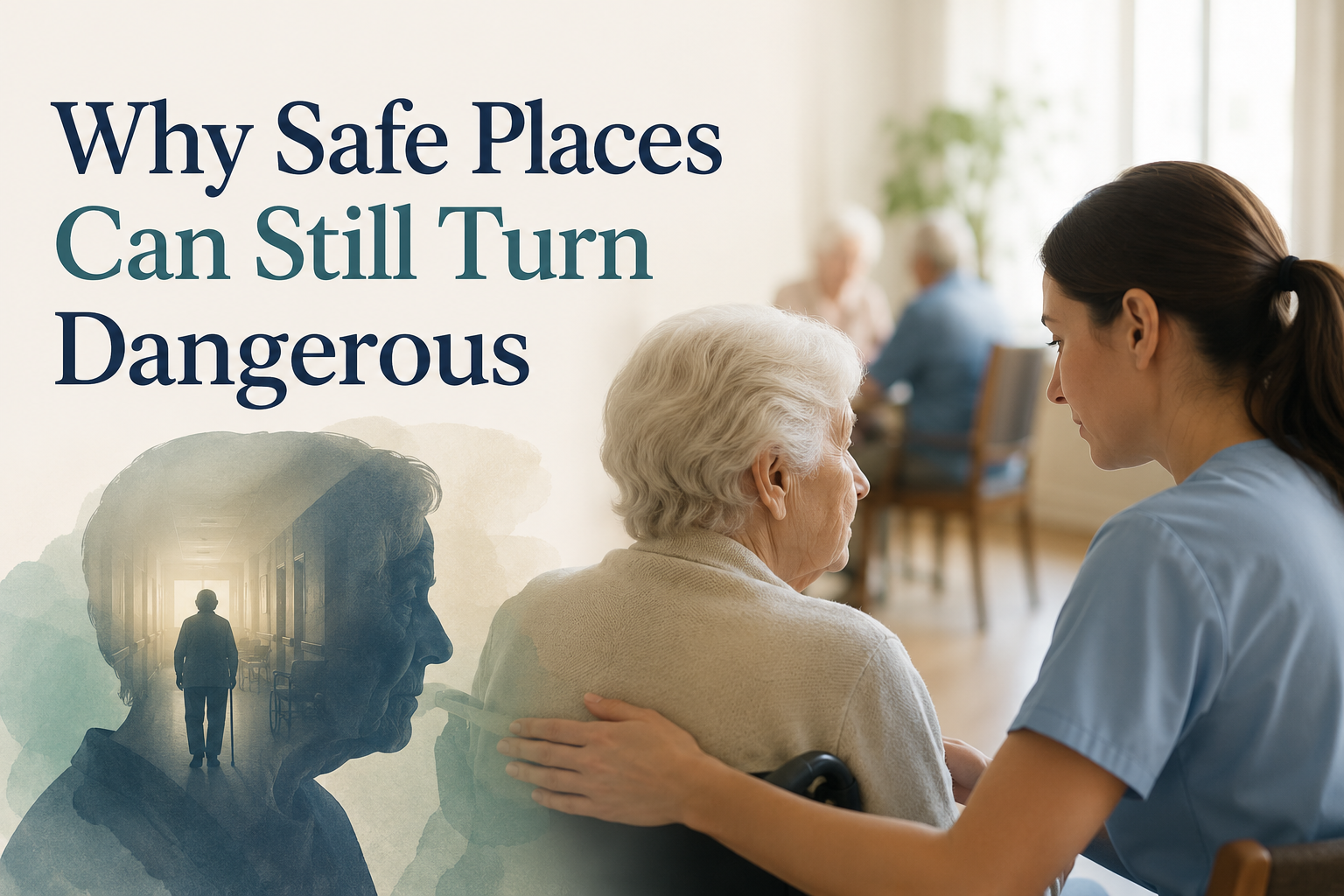
Why safe places can still turn dangerous
Inspection reports and court records have surfaced an uncomfortable pattern: nursing homes and assisted living facilities, the very settings meant to protect people with dementia (a group of conditions that gradually erode memory, judgment, and impulse control), can become places where residents harm one another, sometimes fatally.
The mechanism is not mysterious. When many people who cannot fully interpret their surroundings share tight quarters, ordinary friction (a wrong turn into a room, a raised voice, a crowded hallway) can escalate fast. Warning signs get recorded, yet the safeguards meant to catch them often fall short.
Behavior is a message, not just a problem
Here is a principle I hold onto: in dementia, behavior is communication. When someone lashes out or wanders, they are often telling us they feel lost, cornered, or unsafe, even without words.
Think of it like a smoke alarm. The alarm is not the fire; it is the signal pointing toward the real cause. Reading a resident's agitation as a message shifts the response away from blame and toward a practical question: what does this person need right now, and what in the environment is missing?
That reframing changes what prevention looks like. Calm routines, adequate staffing, and quick attention to distress are not luxuries. They are the tools that keep a small spark from becoming a serious event.
What families can actually observe
Here is what the evidence shows, and what it means for you and how you should apply it to your daily life. A brochure tells you little about how safe a place feels in practice. Your own eyes, at different hours, tell you far more.
A durable habit I encourage families to build is to visit at varying times and quietly notice the atmosphere:
-
Does the space feel calm, or tense and chaotic?
-
Are enough staff present, and do they know residents by name?
-
How quickly is someone's distress noticed and gently addressed?
-
Are common areas supervised, or left unattended?
These observations are a form of screening. No single visit is proof, but a consistent pattern across mornings, evenings, and weekends reveals whether the culture of care matches the tour.
Turning worry into next steps
If something feels off, that instinct deserves follow-up. Ask directly how the facility assesses and manages agitation, how it staffs during high-risk hours, and how incidents are documented and reviewed. Reasonable places welcome these questions.
Oversight of care settings remains uneven, so an engaged family is a genuine safeguard, not a nuisance. Bring specific concerns to your loved one's physician and care team, who can weigh the individual situation and coordinate any changes in setting or support.
I cannot promise any facility will be free of risk, and I would not trust anyone who did. What I can tell you is this: reading behavior as communication, and observing with your own eyes over time, are two of the steadiest ways I know to help keep a vulnerable person safer.
 |
WRITTEN BY |  |
Call 281-354-2417
Book at www.diversecommunityhc.com
Email Info@diversecommunityhc.com
21693 FM 1314 Rd #400, Porter, TX 77365
Disclaimer
This content is provided for educational and informational purposes only and does not constitute medical advice, diagnosis, or treatment. Reading this article does not establish a physician-patient relationship. Treatment decisions should always be made in consultation with a qualified licensed healthcare professional. If you are experiencing a medical emergency, call 911 immediately.
STAY IN THE KNOW
By subscribing, you agree to diverse community's Terms of Use and Privacy Policy